Local News
What's in Mansfield's Water — and Who's Watching While Fracking Operations Run in Richland County?
Mansfield's water supply is 78% groundwater, but city reports don't test for key fracking-related contaminants even as seven producers drill in Richland County.
By Staff · September 3, 2026
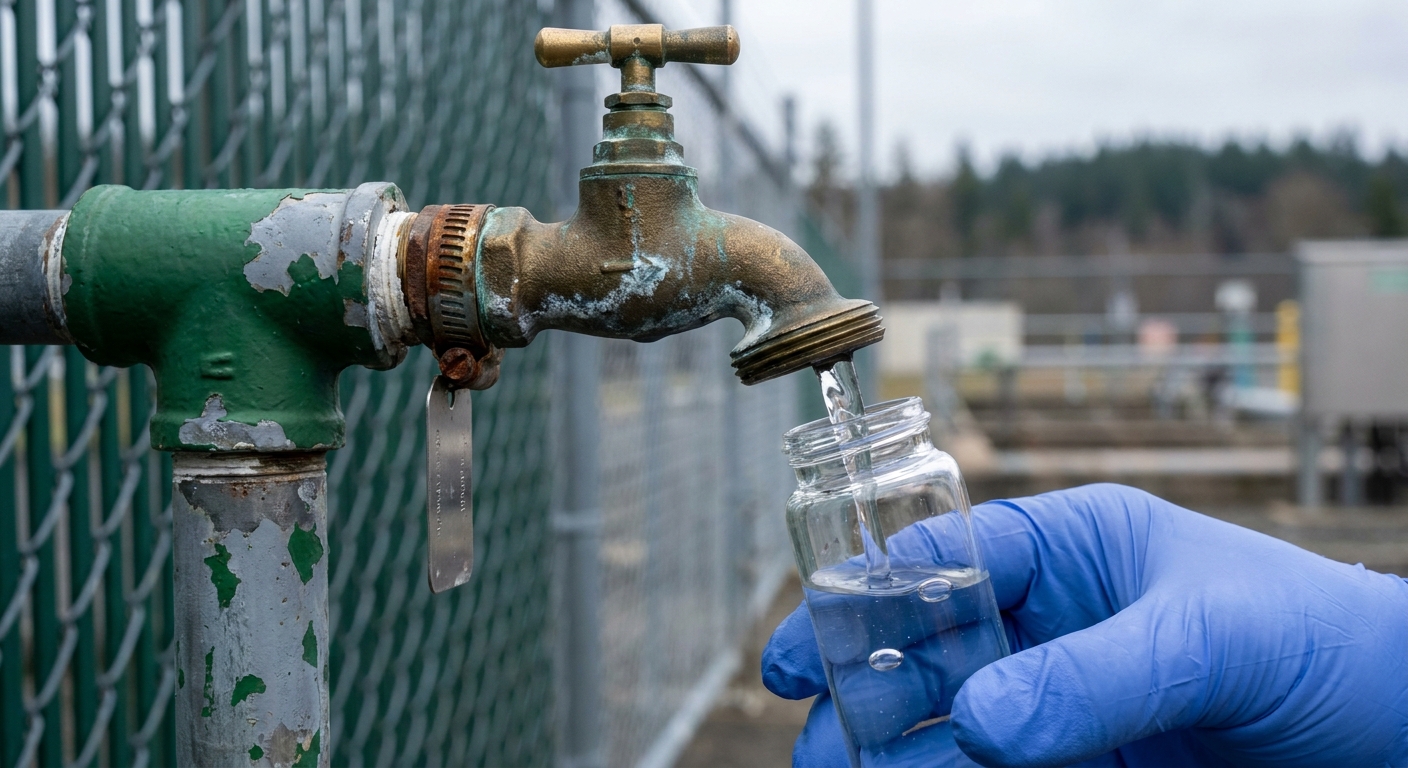
Seven active oil and gas producers operate in Richland County, part of Ohio's shale drilling region. The water Mansfield families draw from their taps comes from two sources: Clearfork Reservoir, about seven miles southwest of the city near State Route 97, and nine municipal wells within two miles of the water treatment plant. Roughly 78 percent of that supply is groundwater; the remaining 22 percent is surface water from the reservoir.
That breakdown matters. County drilling activity and a water system fed largely by underground wells raise pointed questions: Who is testing Mansfield's water for the contaminants fracking can introduce? What do the results show? And does local government have the power to protect residents if something goes wrong?
What the testing shows — and what it doesn't
Mansfield's 2024 Water Quality Report, published in April 2025, states that water from the city's treatment plant meets or exceeds established standards.
The 2024 report listed total chlorine at 1.89 parts per million, ranging from 1.54 to 2.03 ppm, with no violation. Haloacetic acids (HAA5) measured 51.2 parts per billion, ranging from 20.8 to 71.7 ppb, also with no violation. Total trihalomethanes (TTHM) measured 75.2 ppb, ranging from 31.9 to 81.2 ppb. The city reported no TTHM violation overall but exceeded an operational evaluation level at one of eight sampling locations in a fourth-quarter 2024 sample.
Two public notices in recent years flagged treatment issues. A Jan. 3, 2025, notice said testing confirmed the water was safe to drink despite high turbidity in Clearfork Reservoir caused by extreme weather; no disease-causing organisms were found. A Jan. 2, 2026, notice reported a rapid-mix failure that meant the system did not meet treatment requirements, though the city again said the water remained safe.
Here is the gap that matters most: Mansfield's published water-quality reports do not include testing for several parameters commonly associated with fracking contamination — chlorides, sodium, barium, strontium, specific conductivity and methane — all of which appear in Ohio's own pre-drilling baseline water-sampling protocols. The city has not publicly stated whether it plans to add such testing.
Drilling permits and proximity
Richland County's seven active producers appear in data tracking Ohio Department of Natural Resources well records. ODNR's Oil and Gas Well Database classifies wells by status — Producing, Drilling, Shut In, Temporarily Abandoned or Well Permitted. Permit-specific locations showing the distance between active drilling operations and Clearfork Reservoir or the city's nine municipal wells were not available in the public database records accessed for this reporting.
Who has authority — and who doesn't
Richland County commissioners do not regulate fracking or oil-and-gas drilling. Ohio law assigns that authority to ODNR's Division of Oil and Gas Resources Management and places fossil-fuel and nuclear project siting with state officials, not county officials. The Ohio Environmental Protection Agency holds broad authority over water-quality monitoring and groundwater contamination, operating an ambient groundwater monitoring network and investigating complaints.
ODNR's Division of Oil and Gas Resources Management has more than 130 employees, including inspectors and technical staff. Ohio's enacted FY 2026–FY 2027 budget provides approximately $31.2 million in FY 2026 and $31.8 million in FY 2027 for the agency's Oil and Gas Regulation and Safety appropriation, covering permitting, inspections and other core oversight. The division's operating budget draws entirely from non-General Revenue Fund sources, including oil-and-gas severance taxes; its 3.4 percent appropriation increase is intended to cover operating costs and add staff for the Orphan Well Program, according to ODNR testimony.
Testing before drilling — but not after
For a horizontal well, Ohio requires the applicant to submit pre-drilling water sample results for all wells within 1,500 feet of the proposed wellhead. The state protocol calls for baseline testing before drilling, use of an Ohio EPA/NELAP-certified laboratory, chain-of-custody procedures and proper collection methods. Parameters include chlorides, sodium, barium, strontium, specific conductivity, pH and dissolved solids, with methane and BTEX included in some testing tiers.
The developer is not required to conduct water sampling after drilling is complete — only before it begins, and only for wells within 1,500 feet, according to Ohio State Extension guidance. Private well testing is generally not mandated year after year for most Ohio homes, though new private wells and wells in regulated construction or permit situations are subject to specific rules. Annual testing is recommended for well owners, especially near oil-and-gas development.
What happens when something goes wrong
Ohio law gives ODNR authority to require an operator to address harm and, where a water supply has been substantially disrupted by contamination, diminution or interruption from oil-and-gas operations, to replace that supply. The agency has used that authority: ODNR suspended operations at underground waste-injection wells after suspecting brine had leaked beyond the permitted injection zone, demonstrating its ability to issue suspension orders when public safety or drinking water may be at risk.
Groundwater contamination complaints related to oil and gas are typically handled by ODNR's Division of Oil and Gas Resources Management. A property owner can report an issue by phone or through the division's complaint form; ODNR dispatches technical staff to investigate. If contamination evidence is found, the agency contacts the operator to address the problem. For broader water-quality concerns, Ohio EPA directs residents to its complaint tracker or help center; its district offices investigate groundwater contamination and coordinate with other agencies.
Complaints and lawsuits over fracking wastewater contamination have been filed in Washington County near Marietta, where landowners and environmental groups have alleged that Class II injection wells used for oil-and-gas waste are causing underground migration of brine and may threaten drinking water. No comparable complaint case centered on Richland County appears in the public record. ODNR has acknowledged underground leakage or migration from seven injection wells statewide since 2019, while stating that groundwater testing around five of those wells had not found contamination at the time reported.
The accountability gap
For working families in Mansfield who depend on municipal water drawn 78 percent from underground wells, the facts add up to a structural problem. Richland County commissioners have no regulatory authority over oil-and-gas drilling; that power belongs to state agencies under Ohio law. The state requires baseline water testing before drilling begins within 1,500 feet of a wellhead but does not require follow-up testing after drilling is complete, and local officials have no independent authority to compel such monitoring. Meanwhile, the city's published water-quality reports do not test for the very contaminants Ohio's own protocols flag as indicators of fracking impact.
Residents who suspect a problem can file a complaint with ODNR by phone or online form, prompting a state investigation, or contact Ohio EPA through its complaint tracker for broader water-quality concerns. What they cannot do is turn to county government for answers — because county government, by law, has none to give.