Local News
Mansfield Pantries Absorb the Fallout as SNAP Cuts Widen Richland County's Food Gap
HOPE Food Pantry served a rising 606 households in August alone as countywide SNAP enrollment shifts leave smaller households scrambling for help.
By Staff · September 4, 2026
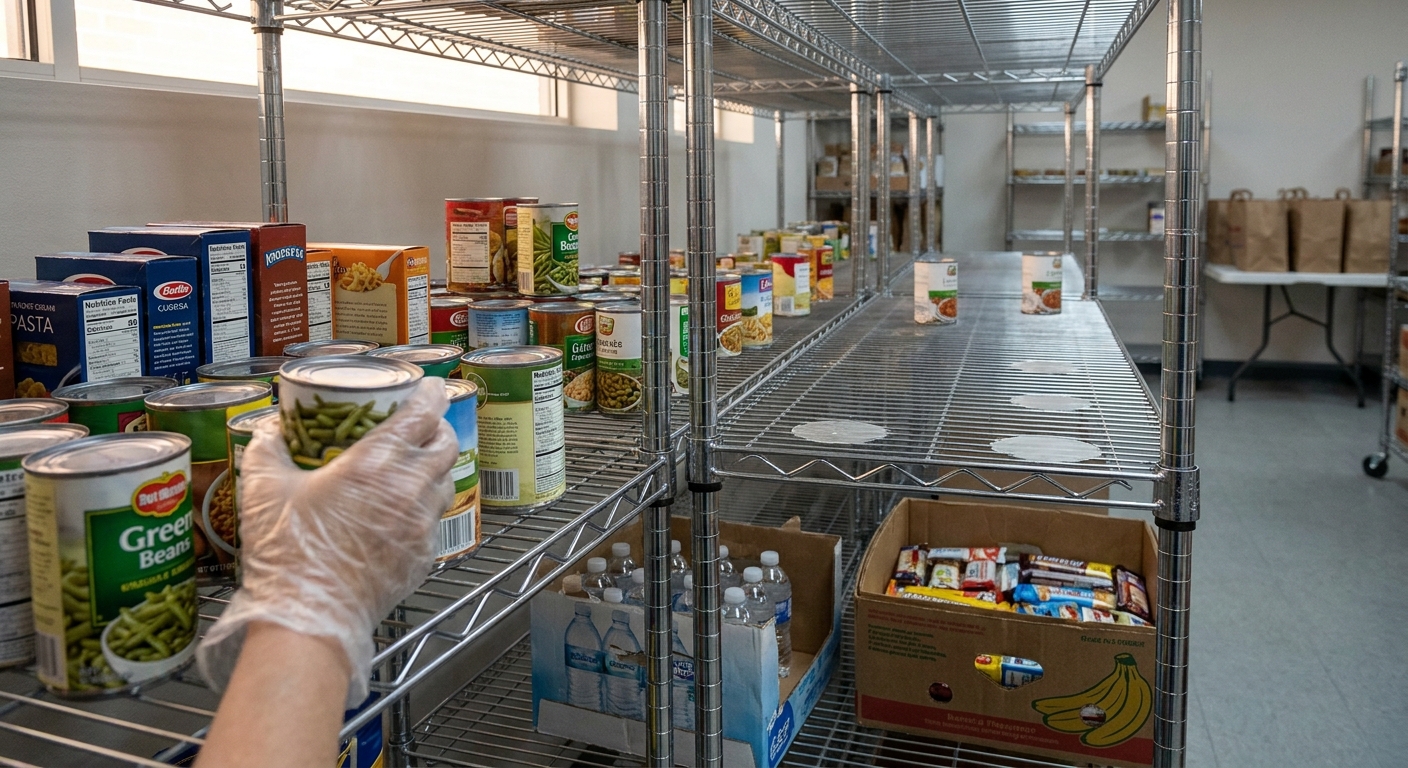
Catholic Charities HOPE Food Pantry on Park Avenue East served 561 households in June, 590 in July and 606 in August — a steady three-month climb that has not let up. Over the past year, the pantry aided 6,752 households and 19,140 people. Ohio food bank network reports have tied the continued growth in pantry demand during 2026 to inflation, economic strain and SNAP cuts.
HOPE is not absorbing the pressure alone. Salvation Army Mansfield at 47 S. Main St., Grace Episcopal Church Food Pantry at 41 Bowman St. and Mount Sinai Baptist Church at 275 Grace St. are all fielding rising need. The Mid-Ohio Food Collective serves Richland County through partner pantries and distributions across a 20-county network with more than 600 local partners.
As of 2024, about 17% of Richland County residents faced food insecurity, according to a Greater Cleveland Food Bank estimate. Feeding America released updated county-level food insecurity data in its 2026 Map the Meal Gap report on July 28.
What the caseload numbers show
Richland County had 8,910 SNAP households and 17,122 active members as of August 2025, the most recent county-level data available from Ohio's caseload reports. Two months earlier, in June 2025, enrollment stood at 8,961 households and 17,070 active members. As of December 2024, the county had 8,240 households and 17,576 active members; federal data for 2022 put the county's SNAP recipients at 18,785. The household count has risen while total membership has fluctuated — a pattern consistent with smaller households cycling onto the rolls even as overall enrollment drifts down from its 2022 level. The Richland County Department of Job and Family Services administers SNAP benefits locally and provides the caseload data.
County-level figures lag behind the current 2026 policy environment: either the delay extends well beyond the nominal two-month publication window, or more recent figures through mid-2026 should be available but have not yet been published.
What is clear at the state level is the trajectory. Ohio's SNAP caseload fell from 1,368,285 active members in September 2025 to 1,295,292 in December 2025 — a drop of 72,993 people, or about 5.3%. H.R. 1 changes pushed approximately 103,035 Ohioans off SNAP benefits as of August 2026.
The gap between cutoffs and paychecks
Richland County's poverty rate stood at 13.8% for 2024, above Ohio's state average. Mansfield's median household income is $42,605 for 2019–2023, reported in 2023 dollars.
Those figures collide with what it actually costs to live here. The MIT living wage calculator puts the rate for a single adult in Richland County at $19.34 per hour; for one adult with one child, $33.57; for two working adults with two children, $13.78 per hour per adult.
Manufacturing still accounts for 25.3% of Mansfield's employment, and production occupations make up 12.3% of local jobs at an average hourly wage of $22.20. The sector includes auto parts, thermostats, pumps, steel and metal working, and food production, with firms such as Newman Technology, Ideal Electric, Therm-O-Disc, Gorman-Rupp, Jay Industries, AK Steel and Dofasco. A production worker earning the local average of $22.20 clears the single-adult living wage but falls well short of what a single parent with one child needs — and loses SNAP eligibility at a threshold that does not close the difference.
County budget under pressure
Richland County commissioners Darrell Banks, Cliff Mears and Tony Vero have been working through 2026 departmental budget requests totaling about $52.3 million, with county staff indicating they may need roughly $4.6 million in cuts to balance the budget.
The federal side of the ledger is about to tighten further. Starting Oct. 1, 2026, the federal share of SNAP administrative costs drops from 50% to 25%, requiring Ohio to cover 75%. Statewide, that shift is estimated to cost Ohio between $51 million and $67 million more per year in lost federal administrative support. Ohio's total state SNAP cost burden is projected to rise from about $146 million to nearly $540 million under H.R. 1, including both administrative and potential benefit-cost shifts. The expanded workload is estimated to require about 1.4 million additional work hours annually and nearly 900 additional county caseworkers, costing over $66 million.
An additional hit could land in October 2027: if Ohio's SNAP payment error rate stays above the federal 6% threshold, the state may have to pay part of benefit costs directly. Ohio's reported fiscal year 2024 error rate was 9.01%.
Pantries brace and improvise
Local pantries have already had one rehearsal for surge conditions. When approximately 8,900 to 8,960 Richland County SNAP households faced potential loss of November 2025 benefits during a federal government shutdown threat, pantries secured extra supplies to meet the expected spike in need.
HOPE Food Pantry, at 523 Park Ave. East, is open Monday, Tuesday and Friday from 9 a.m. to 3:30 p.m. and Thursday from 12:30 to 5:30 p.m. The pantry received a $2,000 check from Coney Fest fundraising sponsors to support operations amid rising demand. The Richland County Fair joined Ohio's statewide "Fight the Hunger, Stock the Trailer" food drive competition to collect donations for local food banks.
First Call 2-1-1 operates a 24/7 helpline and offers walk-in services Monday through Friday, 9 a.m. to 4 p.m., at 36 West Third St. in Mansfield, connecting residents to local food pantries, fresh produce distributions and social services.
Ohio has an approved waiver to restrict sugar-sweetened beverages in SNAP beginning Oct. 1, 2026.
The math in Richland County is straightforward: H.R. 1 is pushing tens of thousands of Ohioans off SNAP while shifting administrative costs to the state and increasing demand at food pantries — transferring what was federal support onto state budgets, county caseworker payrolls and charitable food networks. With county commissioners already looking for $4.6 million in cuts, the question is who absorbs the next increase in need — and with what money.