Government
Ohio opens $21.5 million demolition fund: Can Mansfield-area communities compete for renewal dollars?
Local applicants need eligible properties, a 25% match and reuse plans to compete statewide for grants beginning Sept. 15, 2026.
By Staff · September 14, 2026
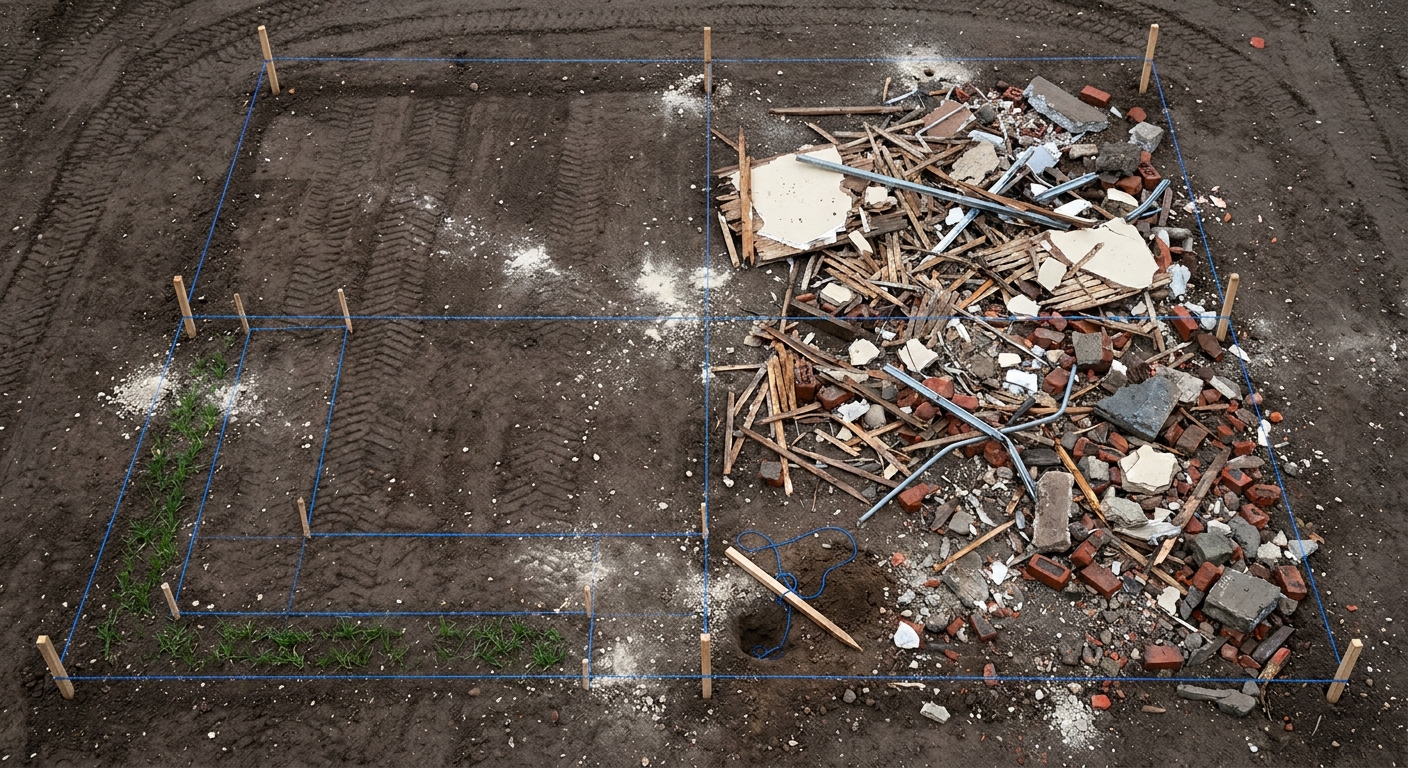
Unsafe structures at 205 Lexington Ave. and 566 Reed St. put Mansfield’s challenge in plain view: Taking down a blighted building is one job; putting the land back to productive use is another. Both structures are subject to demolition by city workers or a contractor.
On Sept. 15, 2026, Ohio will open applications for about $21.5 million in demolition and site-revitalization grants. For Mansfield and other Richland County communities, winning a share will require eligible properties, local matching money and a concrete plan for what happens after the buildings come down.
Awards will be competitive and based on merit, not first-come, first-served. Mansfield-area proposals will compete against projects from across Ohio.
Ohio House Majority Whip Nick Santucci, who represents District 64, highlighted the application round. “There is approximately $21.5 million available to help demolish dilapidated commercial and residential areas to better prepare them for incoming economic development,” Santucci said.
House Bill 96, Ohio’s enacted 2025-27 operating budget, appropriated $21.5 million per fiscal year for the Demolition and Site Revitalization Program. Unspent, uncommitted money from fiscal year 2026 can carry into fiscal year 2027.
The rules and the match
The Ohio Department of Development describes the Demolition and Site Revitalization Program as a source of grants to demolish commercial and residential buildings and revitalize the surrounding property.
Eligible buildings generally must be vacant and blighted under state definitions. They also must be on sites that are not brownfields.
For fiscal year 2027 projects, the state can cover no more than 75% of the total cost. Applicants must supply at least 25% as a local match.
In practical terms, every $100,000 project would require at least $25,000 from local sources. A local proposal therefore needs more than an unwanted building: It needs an eligible site, money for the local share and a persuasive public use for the property afterward.
That last piece matters on Mansfield streets. Demolition can remove an immediate hazard, but residents should also be able to see whether a proposal will support housing, neighborhood investment, economic development or another productive use rather than leave behind an empty lot.
Different paths locally
Several projects already underway around Mansfield show the different paths communities can take with vacant or underused property. They are separate examples of local renewal, not a list of confirmed applications for the new demolition round.
Mansfield has demolition work on its 2026 project list, along with a winter-greening project. The Lexington Avenue and Reed Street structures are among the properties the city has declared unsafe and subject to removal.
At 1157 Park Avenue West, the Richland County Land Bank has sought contractor bids to demolish the West Park Shopping Center. Contractors were required to attend an Aug. 31 walkthrough, and sealed proposals were due at 9 a.m. Sept. 15.
West Park is funded through a different state program. The Richland County Land Reutilization Corporation received a $1 million Brownfield Remediation Program grant for asbestos abatement and demolition of a long-vacant section of the shopping center. That award is separate from the new demolition program, which is for non-brownfield sites.
Downtown Mansfield Forward is taking another route. It received $5 million in Ohio Historic Preservation Tax Credits for a plan to create 102 residential units across 14 historic downtown buildings. That project preserves buildings rather than demolishing them, while tying public support to a specific housing use.
The choices are property-specific: remove an unsafe structure, clean up a contaminated commercial site or preserve an older building for housing. Any proposal for the new state round will need to explain why demolition is the right choice and what public benefit will follow.
Who moves projects forward
Ohio law assigns one lead entity in each county to submit demolition-program applications. In counties with at least 100,000 residents and a county land reutilization corporation, that corporation serves as the lead. Richland County applications move through the Richland County Land Reutilization Corporation, known locally as the Richland County Land Bank.
The Land Bank is led by Executive Director Amy Hamrick and is also handling the West Park contractor process.
Mansfield Mayor Jodie A. Perry serves on the Land Bank’s Development Committee. Richland County Commissioner Tony Vero serves on its Executive Committee. Vero and fellow commissioners Darrell Banks and Cliff Mears make up the county Board of Commissioners.
Mansfield’s Community Development Office also develops and administers programs intended to create economically viable and sustainable neighborhoods.
Those are the local offices and officials residents can watch as sites are considered. The questions for each potential application are direct: Which address is ready? How much will demolition cost? Where will the 25% local match come from? Who benefits from the proposed reuse?
The state will pay as much as three-quarters of an eligible project’s cost. Mansfield-area leaders still must name the property, find the other quarter and answer the harder question: What belongs there next?